

No KYC Crypto Exchange: Private Crypto Swaps & Self-Custody Guide
The Complete 2026 Guide to Non-Custodial Cryptocurrency Trading

If you already hold crypto and want to swap it, start with three checks: the asset and network you are sending, the receiving wallet’s supported network, and any required memo or destination tag. This guide explains wallet setup, self-custody and practical privacy checks before you use a no-KYC crypto exchange.
Already have crypto and want to exchange it? Open the live crypto swap form. Choose the asset and network you are sending, select what you want to receive, and copy the receiving address from your wallet. Review the quote and the order’s deposit instructions before sending any funds. The guide below explains the wallet and privacy choices behind those steps.
Need help with a particular route? Follow the XMR to USDT wallet and network guide, check the receiving address and tag in the USDT to XRP guide, or use the TON to USDT TRC20 guide for Tonkeeper / Keeper. Each guide explains the checks to make before opening and funding an order.
🔑 Key Takeaways
- Non-custodial crypto swap with no account or registration required for crypto-to-crypto trades
- Buy crypto with a streamlined entry tier up to $3,000/month at Level 1 (name, phone, DOB, billing address only — no ID document upload)
- Private crypto-to-crypto exchange across 4,000+ trading pairs through licensed partner infrastructure
- Swap BTC to XMR using established non-custodial routing
- Self-custody wallets only — your keys, your coins, your control
- Data minimization as a personal cybersecurity principle and GDPR right
1. Device Setup for Private Crypto Activity
In the age of social media, ubiquitous tracking, and routine corporate data breaches, separating your sensitive online activity from your everyday personal device is a long-standing personal cybersecurity recommendation — not crypto-specific, but applied across the entire security industry. For users who hold or self-custody cryptocurrency, the same principle applies: a separate device dedicated to wallet apps and exchange access dramatically reduces your attack surface. These days, secondary devices are not expensive, and you can choose almost any modern smartphone.
For users who want the strongest privacy posture, a Google Pixel with GrapheneOS is widely recommended in the cybersecurity community as the gold standard for privacy-focused mobile operating systems. GrapheneOS is an open-source, security-hardened Android variant developed and audited continuously by independent security researchers.
Right after purchase, you should properly configure your device. The basics include:
- Disabled telemetry — turn off all background data sharing where possible
- Strong, unique passwords — different for every account, ideally generated and stored by a password manager
- A separate phone number — registered through normal, lawful channels in your jurisdiction
- A dedicated email address — created specifically for app store sign-ins and sensitive services, not linked to your everyday personal identity
Below are some helpful video tutorials for setting up your device with strong privacy defaults:



2. SIM Card Selection for Mobile Privacy
SIM card choice influences which provider can see your mobile activity and how easily that data can be aggregated with other digital footprints. Different jurisdictions have different SIM registration requirements — always follow the law in the country where you purchase and use the SIM. When choosing a provider, look at their privacy policy, data retention period, and whether they participate in transparent reporting on government data requests.
For users in the European Union, GDPR provides meaningful baseline data protection. Telecommunications providers in EU member states are bound by Article 5 (data minimization), Article 6 (lawful basis for processing), and Article 32 (security of processing). Personal data is shared with foreign authorities only through formal legal channels — mutual legal assistance treaties, judicial cooperation, or other lawful processes. This framework provides predictability and accountability rather than discretionary disclosure.
When choosing a mobile plan, also consider practical factors: data roaming costs, international coverage, and whether the SIM has any activation requirements. Some prepaid SIMs require first-use activation in the country of purchase before roaming will work — verify this before any travel, especially if the SIM will be used internationally.
3. Usage, Protection & Best Practices for Private Crypto Activity
Setting up your device is fundamental — we covered that in section one. But day-to-day use and protection habits are equally important. Purchase devices through legitimate retail channels, keep purchase records as needed for warranty and tax purposes, and treat the dedicated device with the same care as any other piece of important personal hardware.
It’s also important to know that whatever SIM card you use determines the apparent geographic origin of your mobile data traffic. For example, if you use a SIM card issued in one country and roam internationally, services may still see your traffic as originating from your home country’s mobile network. This is a normal feature of how mobile networks operate and is something to be aware of when traveling.
3.1 Periodic Factory Reset for Device Hygiene
Every device accumulates state over time — cookies, cached identifiers, app residue, log files. A factory reset clears device-specific identifiers and accumulated metadata. For a dedicated privacy device, periodic resets are a reasonable hygiene practice — the device starts each cycle clean, with no accumulated cookies, residual app data, or background process state. If you also use different accounts (phone numbers, email addresses) after each reset, the device effectively starts fresh from a tracking-and-fingerprinting perspective.
(We recommend doing this at least once every 2 months for a dedicated privacy device.)
Factory resets also clear app-specific local state, which can help if you’ve encountered persistent app glitches or want to start a new session cleanly. Some apps that offer time-limited free trials may also extend the trial after a fresh device install — useful for legitimate software evaluation.
3.2 Usage Tips
Turn on your device only when you’re actively using it. Mobile devices receive cellular signals even when “off” in software — true power-down through a Faraday enclosure is the only way to be fully off the cellular network. For extra protection, consider a mobile case with a Faraday cage — these block all wireless signals (GPS, Wi-Fi, Bluetooth, cellular). They’re widely available for a few dollars and used by security-conscious professionals, journalists, and individuals working in sensitive environments worldwide. With a Faraday cage, the device cannot be remotely pinged, located, or contacted while inside the enclosure.
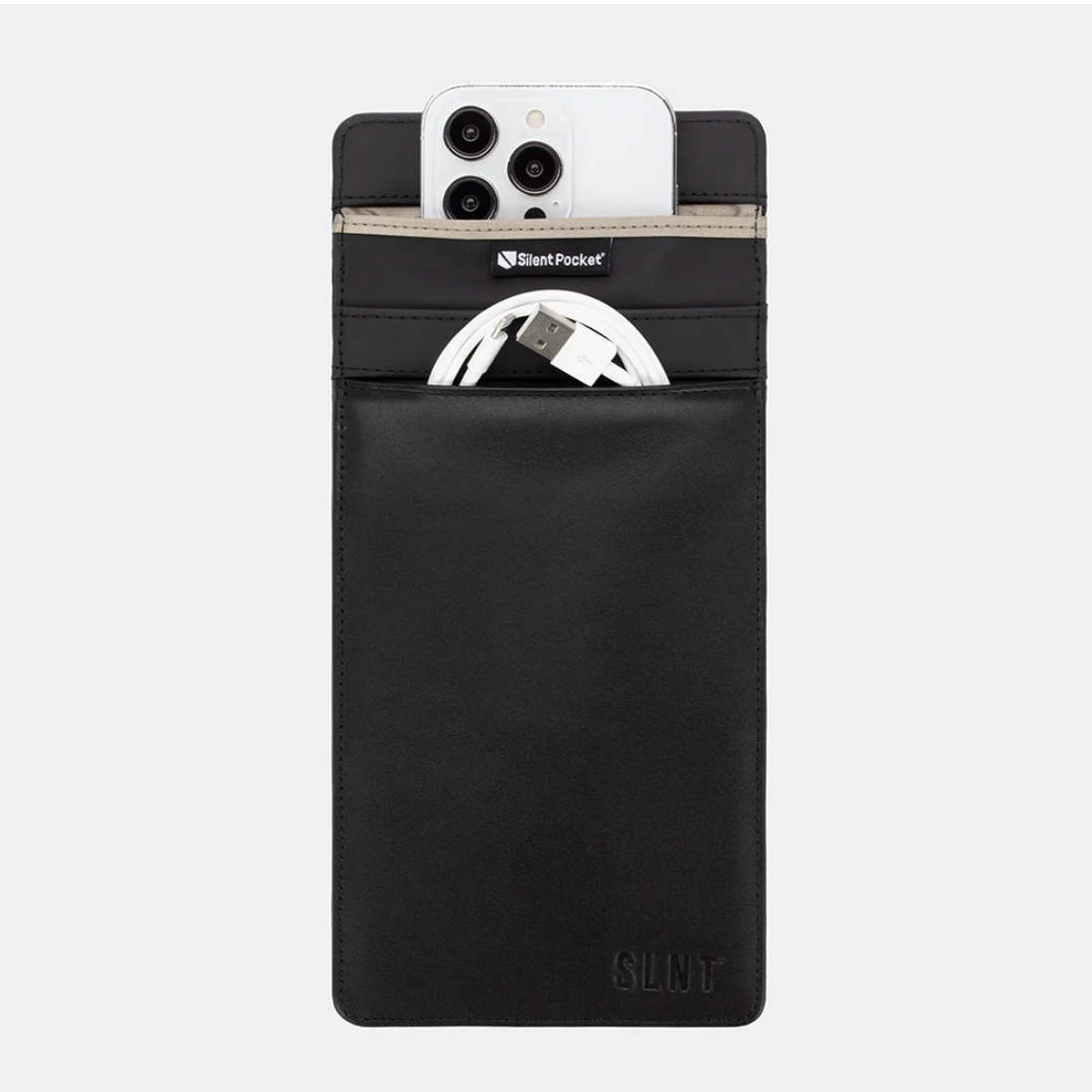
👉 Quality Faraday cage phone sleeve here
3.3 Display Protection
Privacy screen protectors limit the viewing angle of your display — content is visible only when looking directly at the screen, not from the side or through a camera. This is a very useful feature: many attackers first observe their target in a public place, watch what PIN or password is entered, then steal the device and use the captured credentials. A privacy screen protector defeats this entire class of “shoulder surfing” attack at very low cost.
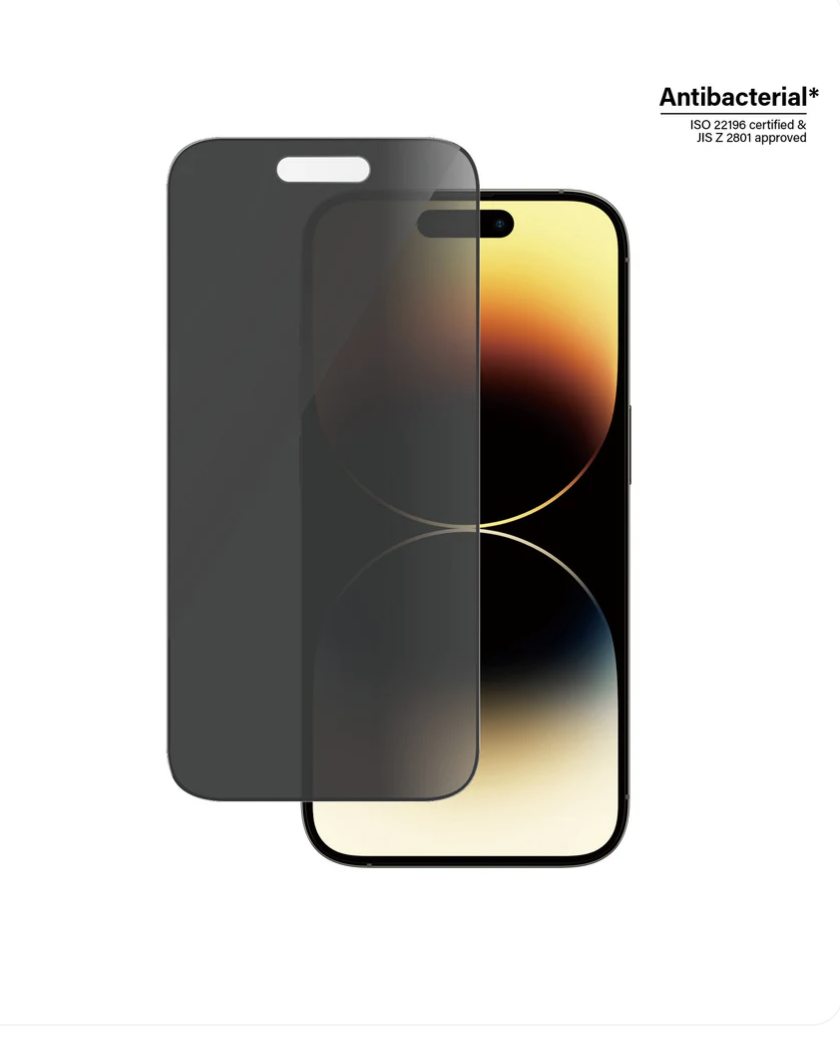
👉 Quality privacy screen protector here (PanzerGlass)
3.4 Must Have: Remote Device Wipe
Activate remote device wipe as soon as you set up your phone. Carefully memorize the entire process and login credentials. If your phone is ever stolen or you lose it, you should be able to wipe it immediately to prevent unauthorized access to your data and accounts.
Even with a strong device password, physical access to a device can sometimes lead to unauthorized unlock through forensic methods — particularly on older Android versions. Remote wipe is your last line of defense and dramatically reduces the value of a stolen device to an attacker.
It’s also advisable to share the remote wipe process and credentials with one trusted person — a family member or close friend — so that if you lose internet access or are otherwise unable to act, they can perform the wipe on your behalf. This is general personal-security advice, useful in many emergencies (medical, travel-related, or otherwise).
3.5 Secure Communication
For private communication, Signal is the widely-recognized gold standard. It is open-source, audited, end-to-end encrypted by default, and run by a non-profit foundation. Element (built on the Matrix protocol) is another well-regarded option with strong end-to-end encryption and federated architecture.
Telegram’s standard chats are not end-to-end encrypted by default — only “Secret Chats” are. The popular perception that Telegram is fully private is widespread but technically incorrect for ordinary chats. For sensitive communication, choose tools where end-to-end encryption is the default, not an opt-in mode. Always set up message auto-deletion and a separate PIN for any messaging app — different from your phone unlock code, so that physical access to one doesn’t compromise the other.
3.6 Crypto Wallet for Self-Custody
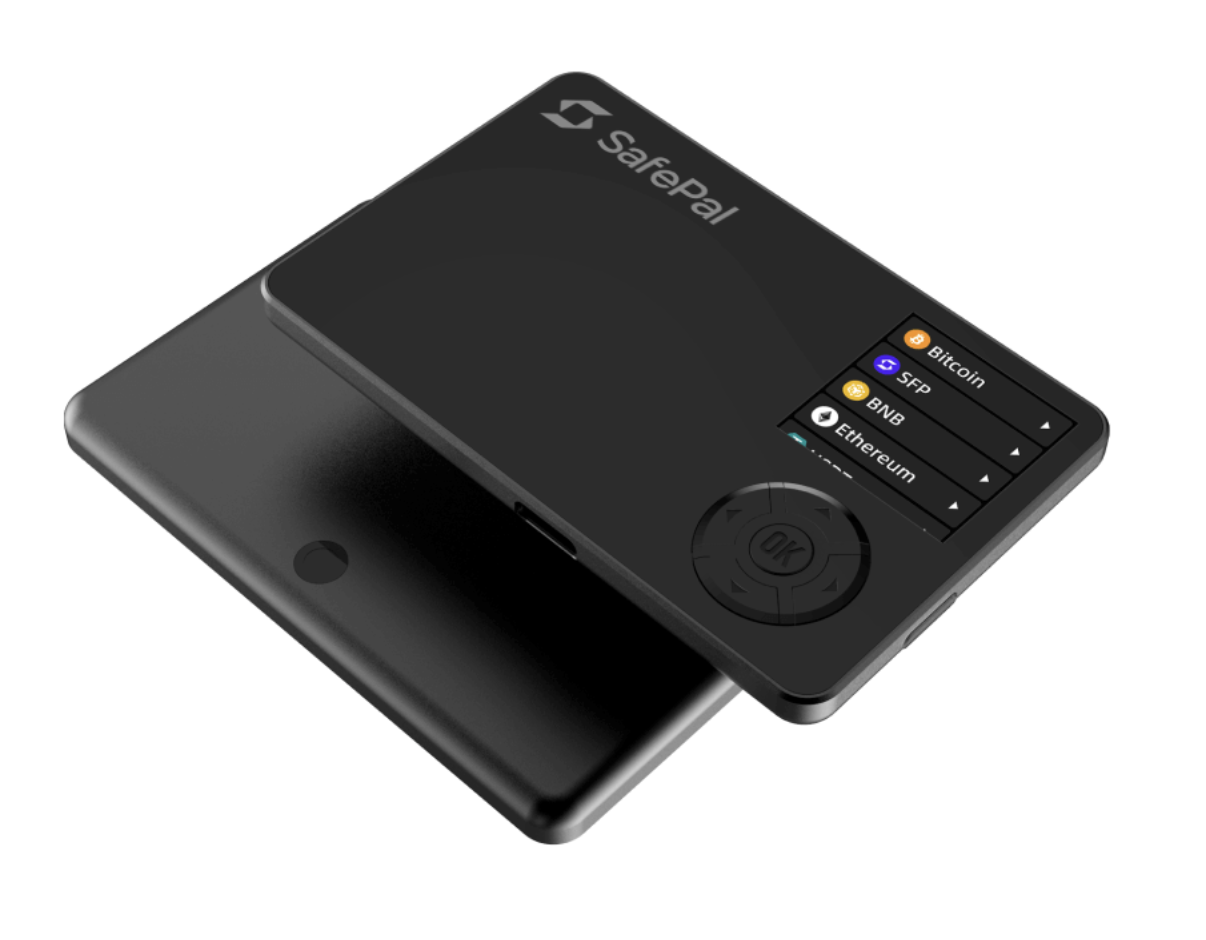
For storing cryptocurrency, the strongest security comes from a hardware wallet — a dedicated offline device that holds your private keys. Trezor is one of the longest-established hardware wallet manufacturers and has a strong reputation in the self-custody community. Trezor doesn’t currently produce a device optimized for direct mobile use, so for mobile-first users we recommend SafePal — a hardware wallet that pairs smoothly with smartphones via QR codes and an air-gapped design.
If a hardware wallet isn’t yet within your budget, reputable open-source non-custodial software wallets are a reasonable starting point: Cake Wallet (multi-coin, supports Monero, great for BTC to XMR swaps) or Stack Wallet.
Remember — for meaningful long-term holdings, the consensus best practice across the self-custody community is a hardware wallet like Trezor or SafePal with the seed phrase backed up offline. This is your self-custody crypto setup.
NEVER SEND FUNDS TO ANY WALLET UNLESS YOU HAVE YOUR BACKUP SAFELY AND CORRECTLY STORED! Ideally, don’t rely on paper for backup — paper burns, gets wet, and degrades over time. Use a fireproof, waterproof metal plate for your seed phrase. There are several reliable models on the market, for example: SafePal Cypher.
4. How to Buy Crypto Through Non-Custodial Channels: Methods Overview
Great! You’ve made it this far. Now let’s get to the actual buying and selling of cryptocurrency through non-custodial channels. Let’s go!
Which Method to Choose
Just 3 years ago, peer-to-peer (P2P) services were the default recommendation for privacy-conscious crypto purchases. That landscape has changed. Regulatory developments, supply-side restrictions, and the practical decline of trustworthy P2P marketplaces have shifted the recommendation. P2P services still exist, but they fall into two categories: technically demanding decentralized options like Bisq (a true decentralized exchange with no central operator, architecturally pure but requiring some technical comfort), or platforms that have added verification requirements aligned with their licensed status, like Binance P2P.
Another option is Bitcoin ATMs — these can work well in some jurisdictions, but regulatory requirements vary significantly. Many countries now require identity verification at BTC ATMs in line with local AML rules. Check the current rules in your jurisdiction. Where ATMs are available without ID for small amounts, they’re convenient but typically charge higher fees than online options.
Another option is direct in-person P2P purchase via cash from a local exchanger or community contact. This can be efficient for users who already have established trusted relationships — but it requires careful judgment about counterparty risk.
Never search for cash crypto traders on the open internet. Organized criminal groups specifically target people looking for large cash crypto deals. These groups are sophisticated and patient — they often build trust over weeks or months, befriending you, attending social events, offering favorable rates (“I’ll give you 10% extra on this trade”), before robbing you. Some operations have run for years.
Only transact in-person within communities where you have established, long-term trusted relationships, and never with strangers. For any cash transaction, consider personal safety measures — meet in safe locations, avoid carrying large amounts alone, and tell trusted contacts where you are going.
That said, if you follow proper security practices and know exactly who you’re dealing with, an in-person cash P2P trade can be the most private option, particularly for larger amounts. If you lack experience here, call a more experienced friend whom you genuinely trust and who knows the local landscape.
However, if you want to buy and sell crypto through a streamlined entry tier for regular amounts — for example up to 3,000 EUR monthly — we have a solution for you through our regulated fiat gateway, described below.
5. Bank Account Setup
If you want to purchase cryptocurrency with fiat currency (cards, bank transfer), you’ll need a bank account in good standing. Banking regulations vary by jurisdiction and bank — always choose options that fit your residency, tax status, and applicable reporting obligations.
Two major international information-sharing frameworks shape bank reporting:
- FATCA (US Foreign Account Tax Compliance Act) — applies to US persons banking abroad. Most non-US banks now identify US-person account holders and report relevant information to the US IRS.
- CRS (OECD Common Reporting Standard) — broader international tax information sharing across 100+ jurisdictions. Banks identify the tax residence of account holders and exchange information with the tax authorities of the holder’s country of residence.
Both frameworks are designed for tax transparency, and most major banks worldwide participate. Always declare and report your income and crypto holdings to the tax authority of your country of tax residence — this is your responsibility regardless of which bank or which crypto service you use. Failing to declare crypto income is a tax offense in virtually every jurisdiction.
When opening a new bank account, banks need to understand the legitimate purpose of the account — that’s a normal part of customer onboarding. Be straightforward about why you’re opening the account: salary deposits, business activity, savings, investment, etc.
Things to Check Before Opening a Bank Account
Whether you’re opening an account in your home country or somewhere where you have legitimate residency or business ties, there are practical things to verify before you commit. The country grid below summarizes what to look at across three regions where many readers of this guide have asked us about banking options.
🌏 Asia & Middle East
- Crypto-friendly regulations?
- Residency requirements?
- Currency options (USD, EUR)?
- Online banking quality?
- Transfer fees abroad?
🌍 Europe
- EU SEPA payments available?
- Crypto debit cards supported?
- Online onboarding (NEO banks)?
- GDPR data protection?
- Deposit insurance limits?
🌎 General Considerations
- Tax residency rules?
- Reporting obligations (CRS, FATCA)?
- Customer service in your language?
- Card issuance & international use?
- Reputation & supervisory authority?
The right bank for you depends entirely on your personal circumstances — where you live, what your tax status is, what currencies you need, and what legitimate purpose the account serves. There is no “best” bank for everyone, only the best bank for your specific situation.
Scenario: If You Want a Fast Online-First Option
This applies mainly to European Union residents. If you want an account that opens quickly through online onboarding rather than an in-branch process, several licensed European NEO banks are widely used. These institutions are fully regulated, licensed, and integrated into the EU financial system. Many of them are crypto-friendly — meaning they have explicit policies allowing payments to and from licensed crypto services, rather than blocking those transactions outright.
Among the well-known options are Revolut, Wise, N26, iCard, Bunq and others. Each has its own strengths — Revolut and Wise excel at multi-currency support; N26 has strong German licensing; iCard has long offered explicit crypto-friendly policies for foreign EU residents; Bunq offers strong privacy and sustainability features. Compare their terms, supervisory frameworks, and fee structures, and choose one that fits your situation.
If you have no other option — neither traveling to open a traditional account nor working with a local bank in your country of residence — a licensed NEO bank with crypto-friendly terms is a reasonable choice. Read the terms of service carefully and understand your reporting obligations.
I Already Have an Account with a NEO Bank — What’s Next?
Great! If you already have an open account, you can fund it from your regular account through standard SEPA transfers (within the EU) or international wires. From there, you can use the NEO bank account to make crypto purchases through our regulated fiat gateway.
Most NEO banks also let you fund their account via card payment from another bank — this is a normal feature designed for convenience and for situations where direct bank-to-bank transfers are slow. The funding method is your choice and doesn’t affect your tax or AML reporting obligations either way.
Once you have funds in your NEO bank account, you can start buying cryptocurrency through our regulated fiat gateway. The gateway operates with three verification tiers — Level 1, Level 2, and Level 3 — that scale with transaction amounts in line with applicable AML rules. Here we’ll cover Level 1, the streamlined entry tier, where the gateway partner collects only: Name, Phone Number, Date of Birth, and Billing Address. No ID document upload, no selfie, no face scan are required at this tier.
Important: you should always provide accurate, truthful information to any verification process. Submitting false information to a regulated payment partner can result in transaction cancellation, account closure, and potentially legal consequences. Honest, accurate verification protects both you and the integrity of the payment system. Higher-tier verification (Level 2, Level 3) does kick in if the gateway partner’s risk model flags a transaction or if you exceed Level 1 limits — that’s the regulated framework working as designed.
Always use accurate, truthful information across all verification steps. After your crypto purchase, the consensus best practice is to keep your crypto in self-custody rather than leaving it on any exchange — your keys, your coins. From a wallet you control, you can send to any address you wish, when you wish, with full visibility into your transaction history.
Self-custody also means that if you ever need to move funds back to fiat through an exchange or a regulated fiat off-ramp, you do so under your control — and from a wallet whose history you yourself maintain.
6. Payment Methods & Verification Levels
At Level 1, the regulated fiat gateway partner collects only: Name, Phone Number, Date of Birth, and Billing Address.
No ID document upload, no selfie, no face scan required at this tier! Verification typically completes in approximately 30 seconds.
Higher verification levels (Level 2, Level 3) apply to larger transaction amounts in line with AML rules.
Buy Crypto – Level 1 Limits
| Payment Method | Per Transaction | Daily | Monthly | Yearly |
|---|---|---|---|---|
| Bank Transfer | 500 USD | 1,000 USD | 3,000 USD | 10,000 USD |
| Debit Card (EUR/GBP/AUD/USD) | 500 USD | 1,000 USD | 3,000 USD | 10,000 USD |
| Google Pay | 50 USD | 150–300 USD | 500–1,000 USD | 500–3,000 USD |
Sell Crypto – Level 1 Limits
| Payment Method | Per Transaction | Daily | Monthly | Yearly |
|---|---|---|---|---|
| Bank Transfer | 150 USD | 600 USD | 1,500 USD | 3,000 USD |
More information can be found here: https://www.acechange.io/fees-and-limits/
Operate Within Applicable Tax and AML Rules
Verification tiers reflect risk-based AML approaches — higher amounts require more verification. This is the regulated framework working as designed, not an obstacle to be worked around. Always declare cryptocurrency income and capital gains to your tax authority and follow all applicable laws in your jurisdiction. Most countries treat crypto transactions as taxable events, and modern blockchain analytics combined with FATCA/CRS data exchange make non-disclosure increasingly impractical anyway. Tax compliance is also your strongest defensive position if a transaction is ever reviewed.
7. Instant Non-Custodial Crypto Swap
In addition to buying cryptocurrency through our regulated fiat gateway, we also offer an instant non-custodial crypto swap service for users who already hold cryptocurrency and want to exchange one digital asset for another. Orders are routed through established non-custodial exchange infrastructure — your coins move from your wallet, through the licensed partner’s routing, to your destination wallet, without AceChange ever holding your funds.
The swap service supports privacy-by-design cryptocurrencies including Monero (XMR), alongside Bitcoin, Ethereum, USDT, USDC and over 4,000 trading pairs. You can swap BTC to XMR, USDT to Monero, Bitcoin to Monero — through the same non-custodial flow, with no per-account limits beyond the per-transaction liquidity available on the routing side.
The swap is fully non-custodial and self-custody compatible — we don’t hold your funds and don’t have access to them. The architecture is designed around data minimization in line with GDPR Article 5(1)(c) principles: only the wallet addresses needed to route your specific transaction are processed. The entire private crypto swap process is instant and protected by the partner’s compliance framework (sanctions screening, transaction monitoring, Travel Rule where applicable) — handled at the licensed-partner layer rather than requiring an account on AceChange.
8. Why Financial Privacy and Asset Protection Matter
Just a few situations from the last 10 years: pandemics, wars, civil unrest, financial crises, and the disruption of national banking infrastructure during armed conflict — Ukraine, Iran, Armenia, and others. Each of these events resulted in greater or lesser instability of the currency or financial system in the country, and each illustrated why diversification matters.
And what’s interesting — banking services have often been the first to be disrupted during major crises. Either banks suspended services, limited withdrawals, or people themselves stopped trusting the local financial system. This pattern repeats: within hours of major destabilization, the banking layer is often the first to fail in practice for ordinary users, regardless of what’s happening at the central bank level.
The invasion began around 4:00 AM on 24 February 2022. By 10:00 AM, ATMs in major cities were emptied. Many banks closed branches that day, and large numbers of POS terminals stopped functioning — either because merchants disconnected them voluntarily or because of system overload. People could transact only in cash, but cash couldn’t be withdrawn from ATMs because they were empty. It took just a few hours for the everyday financial system to seize up. People who held a portion of their assets in self-custodied crypto retained access and could transact internationally even as local banking was disrupted.
During the trucker protests (“Freedom Convoy”), the Canadian government invoked the Emergencies Act and directed banks to freeze the accounts of certain protest participants and their financial supporters — without an individual court order for each account. People who had simply sent small donations were temporarily cut off from their own bank accounts. This was a democratic government using lawful emergency powers — but the episode illustrated how rapidly banking access can change in response to political circumstances.
During the Cypriot banking crisis, the government unilaterally decided on a “bail-in” — a “haircut” — from bank deposits over €100,000. Depositors with savings above that threshold lost a substantial portion of their money — not due to fraud or their own actions, but due to a sovereign decision applied to bank deposits. The episode permanently changed how many savers think about the difference between “money in the bank” and “money I control.”
For these reasons, many financial advisors today recommend a diversified holding strategy — some local-currency cash, some bank deposits, some real assets, and a portion in self-custodied digital assets like Bitcoin, which can be exchanged anywhere in the world for fiat currency. The specific allocation should reflect your personal circumstances, tax obligations, and risk tolerance, ideally discussed with a qualified financial advisor in your jurisdiction.
This is also important from a personal-safety standpoint — if you ever find yourself in a difficult situation with your family, having financial means stored in a form that cannot be unilaterally frozen can be the difference between options and no options. The point isn’t to evade any legitimate legal obligation — it’s to ensure that a banking-system disruption doesn’t leave you stranded.
This is also why data privacy matters for crypto holders. Recent exchange data breaches — including the 2025 Coinbase incident affecting 69,461 customers with leaked names, home addresses, and ID document images — have led to a measurable increase in physical attacks against crypto holders. France’s Interior Ministry reported 41 crypto-related kidnappings and home invasions in just the first 3.5 months of 2026, with leaked KYC data explicitly cited as a driver. Data minimization isn’t about evasion; it’s about ensuring that personal data which doesn’t need to exist doesn’t end up sold to criminals.
Of course, there are many more reasons why financial privacy and self-custody matter — but those are topics for separate articles. We regularly publish new educational guides on cryptographic privacy, self-custody best practices, and personal cybersecurity. Follow us so you don’t miss anything!
Conclusion & Our Recommendation
Our recommendation: even if you’re handling smaller amounts of cryptocurrency, we strongly suggest creating a separate, dedicated device for private cryptocurrency activity and holding your crypto in self-custody. These two habits dramatically reduce your exposure to both digital risks (breach-driven targeting, malware) and physical risks (theft, coercion attempts).
The same dedicated device can also serve other sensitive purposes — private communication via Signal or Element, separating your personal and professional digital footprints, even activating various trial versions of legitimate software and services (which can save money over time).
In case you find yourself in a difficult or dangerous situation, having a portion of your assets in self-custodied crypto means you retain options. With a properly backed-up seed phrase, even physical loss of the device doesn’t mean loss of the funds — recovery takes a few hours and can be done on any compatible device. That kind of resilience is valuable in normal times and invaluable in crisis.
Frequently Asked Questions About No KYC Crypto Exchanges
Is AceChange.io safe in 2026?
Yes — AceChange has operated since 2019. We hold the necessary licenses for our regulated services and are based in Europe. Originally, our model was a P2P exchange; we evolved into a non-custodial swap and regulated fiat gateway interface to give users a more convenient way to access cryptocurrency. We offer privacy-respecting services — but we ourselves are not anonymous: we’re a properly licensed operator working with top compliance partners. We’ve been in the business for years and our track record speaks for itself. Our full compliance framework, including the partner-discharge model for AML and KYC obligations, is documented in our AML/KYC Disclosure.
Does AceChange.io require KYC?
For crypto-to-crypto swaps, the non-custodial routing typically requires only wallet addresses — the minimum technical information needed to route a swap. For buying or selling crypto via fiat through our regulated fiat gateway, the licensed payment partner applies tiered verification in line with EU AMLD5/6 rules: lower tiers (Level 1) require only basic information, higher tiers apply to larger amounts. Everything is documented in this article and in more detail here: https://www.acechange.io/fees-and-limits/.
What is the best way to swap USDT to Bitcoin privately?
Of course, we believe our non-custodial crypto swap service is the best — at least we’re working hard at it. We offer the same prices and fees as the competition, but we differentiate with a simple UI/UX, various free verification tools (AML check, KYC tool) available to all users, reliable educational guides on how to protect yourself and your assets, and 24/7 human support. We’re also preparing a closed community for our most engaged users with deeper educational content on personal cybersecurity, self-custody best practices, and advanced privacy topics — invitation-based and growing carefully.
How do I convert crypto to fiat?
As we wrote in this article, there are ideally 3 methods:
- In-person P2P cash trade with a trusted contact — works well within an established community where you know the counterparty long-term; not appropriate for strangers found online (see the scam alert in section 4).
- Bitcoin ATMs — convenient where available, but in many countries identity verification is now required even for small amounts. Check the rules in your jurisdiction.
- Regulated fiat gateway — AceChange’s Transak-powered gateway allows selling crypto for fiat with tiered verification. At Level 1, limits are smaller (up to 600 USD per day for sells); higher amounts move to higher verification tiers.
What are the limits at Level 1?
For crypto-to-crypto swaps, the only limit is the liquidity available for each pair at the time of the swap — visible as the MAX LIMIT when you create an order. This typically ranges from 100,000 to 300,000 USD per single order, depending on the trading pair. You can create multiple orders sequentially.
For buying or selling via the regulated fiat gateway, per-transaction limits at Level 1 are typically around 500 USD via bank transfer or debit card. Higher daily, monthly, and yearly amounts depend on the verification tier — see Fees and Limits for the current framework. Debit card is usually the most convenient method.
ChangeNOW vs SimpleSwap vs Godex vs AceChange — which is best?
For us, of course, we are the best — acechange.io. We’ve reviewed all the major competitors and we believe we’ve built better UI and UX. We also offer various free tools, both for casual use and for serious work — like our free AML check and free KYC tool — plus a structured library of privacy and self-custody educational guides. We always try to give clients something extra and excellent customer care. That said, every service has its own strengths, and the best choice depends on your specific needs: coin coverage, payment methods, the jurisdictional context, and the user experience that fits you. Try a small order with us and see for yourself.
